



Summary
- Check your credit score regularly using free services like Borrowell and Credit Karma to monitor changes and catch potential issues early.
- Implement the Credit Score Timeline Strategy to systematically improve your score over time, focusing on different actions for immediate, short-term, and long-term results.
- Pay attention to the factors that matter most — payment history and credit utilization have the biggest impact on your Canadian credit score.
- Consider Lotly's secured home loans if you're a homeowner with credit challenges who needs access to funds while working on improving your score.
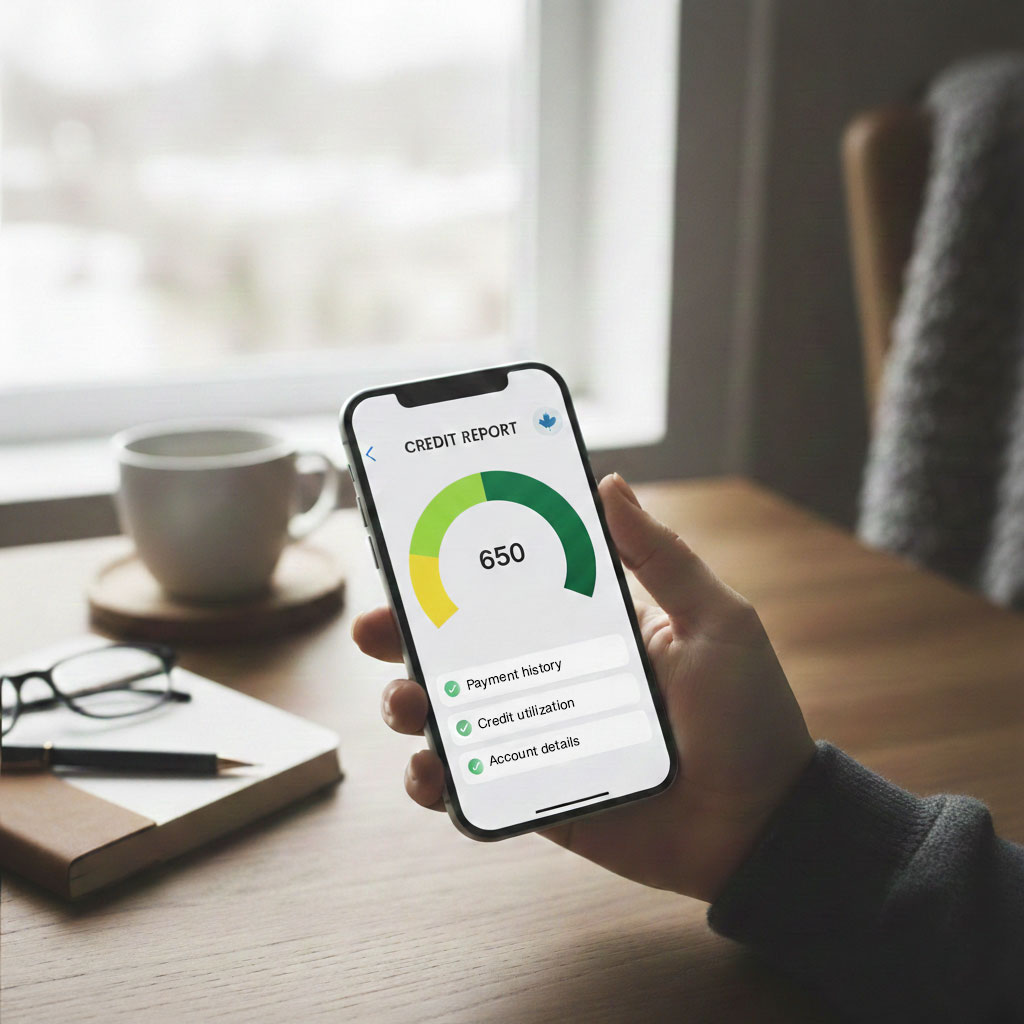
Checking your credit score in Canada for free—is it actually possible, or just another bait-and-switch promise? Most Canadians assume checking their credit means paying for subscriptions, upsells, or shady “free trials” that quietly turn into monthly charges
The truth? You don't need to spend a dime to check your credit score in Canada. There are multiple legitimate, completely free ways to monitor your credit health.
In this comprehensive guide, you'll discover:
- Every legitimate way to check your credit score in Canada without paying fees
- Step-by-step instructions for accessing free credit reports from major bureaus
- A structured timeline strategy to monitor and improve your score over time
P.S. — If you're a homeowner whose credit score isn't where you'd like it to be, Lotly's secured home loans welcome all credit profiles, giving you access to funds while you work on improving your score. Book a free consultation today to learn more.
Understanding credit scores in Canada
Before diving into how to check your credit score for free, it's important to understand what these three-digit numbers actually mean in the Canadian financial landscape.
Your credit score is a numerical representation of your creditworthiness, calculated based on information in your credit report. In Canada, scores typically range from 300 to 900, with higher numbers indicating better credit health.
What is a credit score and why does it matter?
A credit score is essentially a financial report card that lenders, landlords, and service providers use to assess how risky it might be to lend you money or provide services.
A strong credit score can benefit you in several ways:
- Loan and credit card approvals: Higher scores improve your chances of being approved for loans, credit cards, and other credit products.
- Interest rates: Better scores typically earn lower interest rates on mortgages, car loans, and credit cards, which can save you thousands of dollars.
- Rental applications: Many landlords may check your credit before approving a lease, using it as a measure of financial responsibility.
- Insurance premiums: In some cases, insurance companies factor in credit history when determining premiums (poor credit could mean higher premiums).
- Employment opportunities: Certain employers (especially in financial roles) may request to see a version of your credit report with your consent, as an indicator of trustworthiness.
In short, a good credit score doesn’t just open doors; it can also save you money through better terms and rates on financial products. Conversely, a poor score can make it difficult and costly to borrow or even rent an apartment.
Canadian credit score ranges explained
Canadian credit scores typically fall into five categories:
- 760–900 – Excellent: You’re among the credit elite. You will qualify for the best interest rates and terms. Lenders see you as a very low-risk borrower.
- 725–759 – Very Good: You will likely receive competitive offers from lenders and have high approval odds.
- 660–724 – Good: You should qualify for most standard credit products. This is considered a reliable borrower range and anything above 660 is viewed favorably by most lenders.
- 560–659 – Fair: You may get approved for credit but likely at higher interest rates or with stricter terms. This range signals some issues in your credit history.
- 300–559 – Poor: You’ll struggle to get approved for unsecured credit. If approved, you’ll face low limits and very high rates. Significant improvement is needed.
It's important to note that Equifax and TransUnion (Canada's two major credit bureaus) use slightly different scoring models. This means your score might vary between them—and that's completely normal; what matters is the overall trend and range of your scores.
Stuck in the ‘Fair’ or ‘Poor’ range? Improvement is possible — but it takes months. Lotly helps homeowners access equity-based financing during that window, so one low score doesn’t freeze your entire financial life.
Official free credit report sources in Canada
The Canadian government ensures all citizens have free access to their credit information.
By law, Equifax and TransUnion must provide you with free access to your credit report at least once per year upon request. These official reports (sometimes called consumer disclosures) contain all the information used to calculate your score, though they often do not include the numerical score itself. Still, they are vital for checking the accuracy of your credit history.
Here are the ways to get your official free credit reports directly from Equifax and TransUnion:
Equifax Canada free credit report
Equifax provides Canadians with free access to their credit report in several ways:
Online:
- Visit Equifax Canada's website
- Select "My Credit Report" from the products menu
- Choose the free credit report option (not the paid subscription)
- Complete the verification process
- Review your report online
By Phone:
- Call 1-800-465-7166
- Follow the automated instructions
- Verify your identity
- Your report will be mailed within 5-10 business days
By Mail:
- Download and complete the Canadian Credit Report Request Form
- Include photocopies of two pieces of valid ID
- Mail to: Equifax Canada Co., National Consumer Relations, P.O. Box 190, Station Jean-Talon, Montreal, Quebec, H1S 2Z2
Pro Tip: Equifax now also offers free monthly credit score updates online for all Canadians. When requesting your free report, look for the option to also view your score.
TransUnion Canada free credit report
TransUnion also provides free credit reports through multiple channels:
Online:
- Visit TransUnion Canada's website
- Select "Credit Report" from the main menu
- Choose the free consumer disclosure option
- Complete the identity verification process
- Access your report immediately
By Phone:
- Call 1-800-663-9980 (Quebec residents: 1-877-713-3393)
- Provide personal information for verification
- Request your free consumer disclosure
- Your report will be mailed within 5-10 business days
By Mail:
- Download and complete the TransUnion Request Form
- Include photocopies of two pieces of ID
- Mail to: TransUnion Consumer Relations Department, P.O. Box 338, LCD1, Hamilton, Ontario, L8L 7W2
Note: While TransUnion's free report doesn't automatically include your numerical score, Quebec residents can access their TransUnion score for free by law.
Free third-party credit score services in Canada
Beyond the official credit bureaus, several reputable third-party services offer free access to your credit score (and often a report) on an ongoing basis. These services make money not by charging you, but through advertising or recommending financial products (like credit cards or loans) based on your credit profile. They provide your score for free and checking through them will not hurt your credit – they use soft inquiries only.
Because they update more frequently (often weekly), these services are great for monitoring your credit score over time and catching changes quickly. Let’s look at two of the most popular free services:
Borrowell
Borrowell is a Canadian fintech company that provides free weekly access to your Equifax credit score and report.
How to sign up:
- Visit Borrowell.com or download their mobile app
- Create an account with your email and password
- Provide personal information for identity verification
- Receive immediate access to your Equifax Risk Score 2.0
Key features:
- Credit bureau: Equifax
- Update frequency: Weekly
- Credit monitoring: Yes, with alerts for changes
- Additional tools: AI-powered Credit Coach, personalized loan recommendations, bill tracking
- Unique benefit: Includes rent payment reporting to help build credit
Limitations:
- You'll receive promotional offers for financial products
- Some advanced features require paid upgrades
Credit Karma Canada
Credit Karma provides free access to your TransUnion credit score and report, updated weekly.
How to sign up:
- Visit CreditKarma.ca or download their app
- Create an account with email and password
- Verify your identity by answering security questions
- Access your TransUnion score immediately
Key features:
- Credit bureau: TransUnion
- Update frequency: Weekly
- Credit monitoring: Yes, with real-time alerts
- Additional tools: Score simulator, personalized product recommendations, educational resources
- Unique benefit: Robust credit score simulator to test different financial scenarios
Limitations:
Financial product marketing based on your profileDoesn't include Equifax data
- Financial product marketing based on your profile
- Doesn't include Equifax data
Banking services that offer free credit scores
Several major Canadian banks now offer free credit scores to their customers as an added benefit. If you already bank with one of these institutions, this can be the most convenient way to monitor your score.
Banks offering free credit scores:
- Scotiabank: Provides your TransUnion credit score for free through the CreditView tool in online banking or the Scotia mobile app. Updates monthly.
- TD Bank: Offers free TransUnion credit score monitoring via the TD mobile app’s CreditView Dashboard (recently launched). Updates periodically (the score is pulled when you check in the app, generally about monthly).
- RBC (Royal Bank): Provides a free TransUnion score through the online banking portal (the feature is called RBC MyCredit or accessed via CreditView). Updated monthly.
- CIBC: Offers a free credit score to clients through the CIBC mobile banking app. This uses TransUnion as well, but note that CIBC’s score is only refreshed every three months (quarterly).
- BMO (Bank of Montreal): Provides a free TransUnion score in the BMO online banking and mobile app (using TransUnion’s CreditView). Updates monthly.
How to access:
- Log into your online banking portal or mobile app
- Look for "Credit Score" or similar option in the menu
- For example, in RBC online banking you’d go to My Services > View Your Credit Score, which takes you to the TransUnion CreditView dashboard.
- In Scotiabank’s app, you’d find TransUnion Credit Score under the Insights or My Updates section.
- Complete one-time registration if required
- View your score and monitoring tools
Update frequency: Most bank-provided scores update monthly, though some may update more or less frequently.
Comparing free credit score services in Canada
With multiple options available, here's a side-by-side comparison to help you choose the right free credit score service for your needs:
Equifax Direct
- Credit bureau data: Equifax (credit report + score)
- Update frequency:
- Credit report: on demand (free annually by mail/phone or free online monthly)
- Credit score: monthly (with a free Equifax online account)
- Key features:
- Official source
- Comprehensive credit report included with free request
- Free monthly credit score available online
- Limitations:
- Free report by mail/phone does not include a score
- Limited monitoring unless you upgrade to a paid plan
TransUnion Direct
- Credit bureau data: TransUnion (credit report only, free)
- Update frequency:
- Credit report: on demand (free online monthly or by request; at least annually by law)
- Credit score: not included (except in Quebec)
- Key features:
- Official source
- Free credit report disclosure online or by mail
- Limitations:
- No free TransUnion score outside Quebec
- Score requires a paid plan or third-party service
- No automatic monitoring or alerts
Borrowell
- Credit bureau data: Equifax (credit score + report)
- Update frequency: Weekly (refresh every 7 days)
- Key features:
- Weekly Equifax credit score
- Email alerts for credit changes
- Credit Coach tips and insights
- Bill tracking
- Optional rent reporting
- Limitations:
- Ads for financial products
- Equifax only (no TransUnion data)
- Some add-on features (like rent reporting) cost extra
Credit Karma
- Credit bureau data: TransUnion (credit score + report)
- Update frequency: Weekly (refresh every 7 days)
Key features:- Weekly TransUnion credit score
- Credit change alerts
- Credit score simulator
- Strong educational content
- Limitations:
- Ads and product recommendations
- TransUnion only (no Equifax data)
- Simulator is an estimate, not exact
Bank Providers
- Credit bureau data: Varies by bank (mostly TransUnion)
- Update frequency: Monthly (sometimes quarterly)
- Key features:
- Built into your banking app or online banking
- Convenient access
- Some banks offer score history or simulators (e.g. CreditView)
- Limitations:
- Only available to that bank’s customers
- Usually limited to one credit bureau
- Updates can lag compared to weekly services
Pro Tip: For the most complete picture of your credit health, use at least two services that draw from different bureaus (e.g., Borrowell for Equifax and Credit Karma for TransUnion).
Is checking your credit score for free in Canada legitimate?
Yes, checking your credit score for free in Canada is completely legitimate. Many Canadians worry that free services are either scams or will harm their credit score—neither is true when using the services listed in this guide.
Here's what you need to know about free credit checks:
- Soft vs. Hard Inquiries: When you check your own credit (or when a company checks it to provide you with your score), it's considered a "soft inquiry" that doesn't affect your score. Only "hard inquiries"—when lenders check your credit for loan applications—can temporarily lower your score.
- How Free Services Make Money: Free credit services typically earn revenue through:
- Recommending financial products that match your profile
- Earning commissions when you sign up for these products
- Offering premium features as paid upgrades
- Data Security: Legitimate free credit services use bank-level encryption to protect your personal information. They cannot make changes to your credit report or apply for credit in your name.
- What to Watch Out For: Be wary of services that:
- Require a credit card to access your "free" score
- Have unclear privacy policies
- Lack secure websites (look for "https" in the URL)
How often can you check your credit score for free?
One of the biggest advantages of free credit score services is the ability to check your score frequently without any negative impact.
Legal entitlements:
- You're legally entitled to one free credit report per year from each of the major bureaus (Equifax and TransUnion)
- Some provinces have additional consumer rights — Quebec residents can access their TransUnion score for free
Third-party service frequency:
- Borrowell: Weekly updates of your Equifax score
- Credit Karma: Weekly updates of your TransUnion score
- Banking apps: Typically monthly updates
Monitoring frequency best practices:
- Weekly: Use this if you are actively in the process of credit improvement (for example, you’re paying down balances or have a goal to get a mortgage soon) and want to track the impact. Weekly checks via Borrowell/Credit Karma can show you gradual changes. Weekly is also helpful to catch any sudden drops or fraudulent activity quickly.
- Monthly: A good routine for general credit health maintenance. A monthly check-in (e.g. when your bank updates the score, or just pick a date each month) is enough to see trends and address issues promptly. Many people do a monthly review of finances – include your credit score in that.
- Quarterly: At minimum, consider looking at your score and reports every 3–4 months if you’re not checking more often. A quarterly check could catch errors or problems within a reasonable time before they cause too much damage. For instance, you could check Equifax (via Borrowell) at the start of a quarter and TransUnion (via Credit Karma or your bank) mid-quarter.
- Semi-Annual Alternating Reports: The Financial Consumer Agency of Canada suggests staggering your official bureau reports – for example, order your Equifax report now, and your TransUnion report in six months. This way, you might catch an issue on one report that you’d otherwise wait a full year to see.
Pro Tip: Create a "Credit Calendar" that reminds you when to check each service. For example, check Borrowell on the 1st of the month, Credit Karma on the 15th, and your bank's score at the end of each month.
The credit score timeline strategy
Rather than just randomly checking your score, implement this structured approach to credit monitoring and improvement that maps specific actions to different timeframes based on your financial goals.
Think of this as a roadmap:
- Immediate (1–30 days): Credit Audit Phase – Gather information and set a baseline.
- Short-Term (1–3 months): Implementation Phase – Take quick actions to boost your score and address glaring issues.
- Mid-Term (3–12 months): Optimization Phase – Optimize your credit habits and mix for steady improvement.
- Long-Term (1–3 years): Mastery Phase – Adopt advanced strategies and long-term habits for excellent credit health.
Let’s break down each phase with step-by-step guidance:
Immediate (1-30 days): credit audit phase
Start with a comprehensive review of your current credit situation:
- Conduct a "credit audit" by obtaining free reports from both Equifax and TransUnion
- Document all discrepancies between reports in a spreadsheet or note app
- Create a baseline score record noting your current scores from both bureaus
- Identify quick-win opportunities like:
- High-balance accounts that could be paid down
- Reporting errors that should be disputed
- Accounts incorrectly showing as late or delinquent
Action template: Create a simple tracking document with three columns: "Credit Issue," "Action Required," and "Date Completed."
Short-term (1-3 months): implementation phase
Focus on making immediate improvements and tracking their impact:
- Track score changes after implementing quick fixes
- Document which actions moved the needle most in your credit tracking document
- Set up automated payment systems for all credit accounts to eliminate late payments
- Create a "credit calendar" marking:
- Statement closing dates for all accounts
- Optimal payment windows (before reporting dates)
- Scheduled check-ins with free monitoring services
Pro Tip: Pay down credit card balances a few days before your statement closing date—this is typically when card issuers report to the bureaus.
Mid-term (3-12 months): optimization phase
Work on strategically improving your credit mix and utilization:
- Implement a "credit diversity plan" if lacking certain account types
- Create a "credit utilization schedule" showing optimal times to use credit
- Document seasonal variations in your score
- Identify patterns in score fluctuations related to specific behaviours
Example utilization schedule: Keep utilization under 10% until 3-5 days before your statement date, then make a small purchase to show activity (1-5% utilization), and pay it off immediately after the statement generates.
By the end of 12 months, if you followed these steps, you should see a substantial improvement. Perhaps you’ve moved from Poor to Fair, or Fair to Good, etc. Realistically, building excellent credit takes time, but a year of solid effort can often add 50 to 100+ points depending on where you started. Celebrate the progress and get ready to transition into long-term maintenance mode.
Long-term (1-3 years): mastery phase
Develop advanced strategies for long-term credit excellence:
- Track your "credit improvement velocity" (points gained per quarter)
- Create a "credit maturity timeline" showing when accounts will reach key age milestones
- Develop a "credit application strategy" for major purchases
- Build a personalized "credit score forecast" based on your specific patterns
Sample maturity timeline: "Credit Card A will be 2 years old in March 2027, potentially adding 5-10 points to my score. Credit Card B will reach 5 years in September 2028, which could add another 15-20 points."
How to improve your credit score in Canada
Once you're regularly monitoring your credit score for free, you'll likely want to improve it. Here are effective strategies for boosting your Canadian credit score.
A higher credit score can save you thousands of dollars through better interest rates on mortgages, car loans, and credit cards. It can also help you qualify for premium financial products and rental housing.
Quick credit score improvement strategies
These actions can potentially show results within 30-90 days:
- Pay down credit card balances to below 30% of your limit (ideally below 10%)
- Request higher credit limits on existing accounts to lower your utilization ratio
- Become an authorized user on a family member's well-established credit card
- Dispute errors on your credit report through Equifax and TransUnion's formal processes
- Set up automatic payments for at least the minimum amount due on all accounts
- Check for and address collections accounts that might be dragging down your score
Pro Tip: Focus first on credit utilization; it's typically the fastest way to see improvement. For every $1,000 in credit limit, try to keep your balance below $300 (or ideally below $100).
Long-term credit building habits
These practices take time but build a solid foundation for excellent credit:
- Never miss a payment on any credit account; payment history is the most important factor
- Keep old accounts open even if rarely used; the average age of your accounts matters
- Limit new credit applications to avoid multiple hard inquiries
- Diversify your credit mix with both revolving accounts (credit cards) and installment loans
- Monitor your credit regularly using the free services discussed earlier
- Address issues immediately rather than letting them linger and cause more damage
Credit mix strategy: If you only have credit cards, consider adding a small installment loan like a credit-builder loan from a credit union. If you only have loans, a secured credit card can help balance your credit mix.
Getting help with credit improvement
Sometimes you need additional support to improve your credit score:
- Credit counseling services like Credit Canada offer free advice on managing debt and improving credit
- Debt consolidation can simplify payments and potentially lower interest rates
- Secured credit cards can help rebuild credit after past problems
- Credit-builder loans from credit unions are specifically designed to establish positive payment history
For homeowners with credit challenges: Lotly offers secured home loans that accept all credit profiles and consider income sources traditional lenders often ignore. Consolidating multiple high-interest debts into one structured payment can lower your credit utilization, stabilize cash flow and support long-term credit improvement.
Protecting your credit while monitoring it
As you begin regularly checking your credit, it's important to protect your financial information from potential fraud.
Identity theft and credit fraud can devastate your credit score and take months or years to resolve. Taking preventive measures is much easier than cleaning up afterward.
Identity theft prevention
- Use strong, unique passwords for all credit monitoring services
- Enable two-factor authentication when available
- Never access credit services on public Wi-Fi without a VPN
- Regularly check your credit report for accounts you don't recognize
- Consider a credit freeze if you're not actively applying for new credit
- Be wary of phishing attempts claiming to be from credit bureaus
Red flags to watch for
Monitor your free credit reports for these warning signs of potential fraud:
- Unfamiliar accounts or inquiries you didn't authorize
- Sudden, unexplained drops in your credit score
- Addresses you don't recognize listed in your personal information
- Dramatic changes in account balances you didn't make
- Collection accounts you don't recognize
If you suspect fraud: Immediately contact both Equifax and TransUnion to place a fraud alert on your file, notify your financial institutions, and file a report with the Canadian Anti-Fraud Centre.
Ready to take control of your credit? Start with free monitoring
Understanding and monitoring your credit score doesn't have to cost anything in Canada. With the legitimate free resources outlined in this guide, you can take control of your financial health without opening your wallet.
Key takeaways to remember:
- Check your credit score regularly using free services like Borrowell and Credit Karma to monitor changes and catch potential issues early.
- Implement the Credit Score Timeline Strategy to systematically improve your score over time, focusing on different actions for immediate, short-term, and long-term results.
- Pay attention to the factors that matter most — payment history and credit utilization have the biggest impact on your Canadian credit score.
- Consider Lotly's secured home loans if you're a homeowner with credit challenges who needs access to funds while working on improving your score.
Rebuilding credit is a process, but access to money shouldn’t disappear in the meantime. If you’re a homeowner working to improve your score, Lotly can help you consolidate debt or access equity without waiting for a “perfect” number. Book a free consultation to see your options today.
FAQs about free credit scores in Canada
Why are there different scores from different sources?
It's completely normal to see different credit scores from different sources. Here's why:
- Different bureaus: Equifax and TransUnion may have slightly different information in their files
- Different scoring models: Each bureau uses their own proprietary scoring algorithm
- Different reporting times: Not all lenders report to both bureaus or at the same time
- Different score ranges: Some scoring models use slightly different ranges
What matters most: Focus on the trends in your scores rather than the exact numbers. If both scores are moving in the same direction, you're on the right track.
Can checking my own credit score hurt my rating?
No, checking your own credit score will never hurt your rating. This is one of the most common credit myths.
When you check your own score, it's recorded as a "soft inquiry" that doesn't affect your score. Only "hard inquiries"—when lenders check your credit as part of a loan application—can temporarily lower your score.
You can check your own score as often as you like through the free services mentioned in this guide without any negative impact.
What should I do if I find errors on my credit report?
Credit report errors are surprisingly common and can significantly impact your score. Here's how to address them:
For Equifax errors:
- Visit the Equifax dispute center
- Create an account or log in
- Identify the incorrect information
- Provide documentation supporting your claim
- Submit your dispute
- Follow up after 30 days if not resolved
For TransUnion errors:
- Visit the TransUnion dispute page
- Complete the online form or download the mail-in form
- Provide supporting documentation
- Submit your dispute
- Check status after 30 days
Documentation tip: Keep copies of all correspondence and follow up if you don't receive a response within 30 days. Under Canadian law, credit bureaus must investigate disputes within a reasonable time period.

Ayaz Virani
Ayaz Virani is the Vice President of Sales at Lotly and a licensed mortgage agent in Ontario under 8Twelve Mortgage Corporation (FSRA License #13072). With over three years of experience as a Growth Manager at KOHO Financial, Ayaz brings deep expertise in helping Canadians access smart, flexible financing. He has successfully funded hundreds of homeowners and is known for his transparent advice, fast service, and genuine care for each customer’s financial goals.